
The Big 7 of Cuyabeno
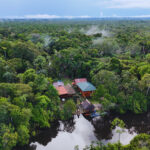
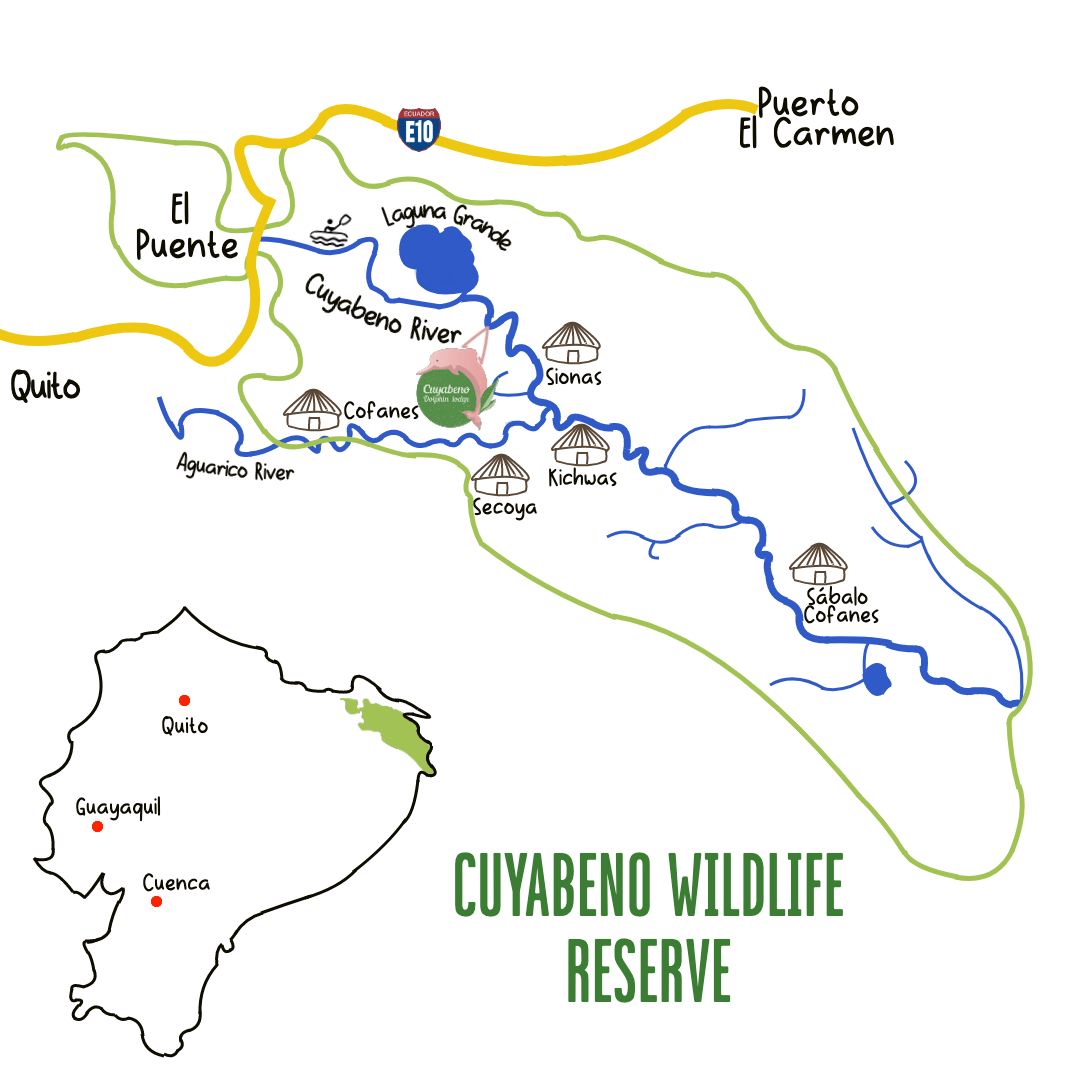
The Cuyabeno Wildlife Reserve is one of the most biodiverse Amazonian territories in Ecuador — rivers, lagoons, forests and wetlands sheltering an extraordinary variety of wildlife. From that richness was born the Big 7 Cuyabeno: an initiative by Ecosportour and Cuyabeno Dolphin Lodge that highlights seven emblematic species of the reserve, divided into three worlds.
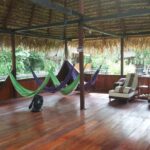
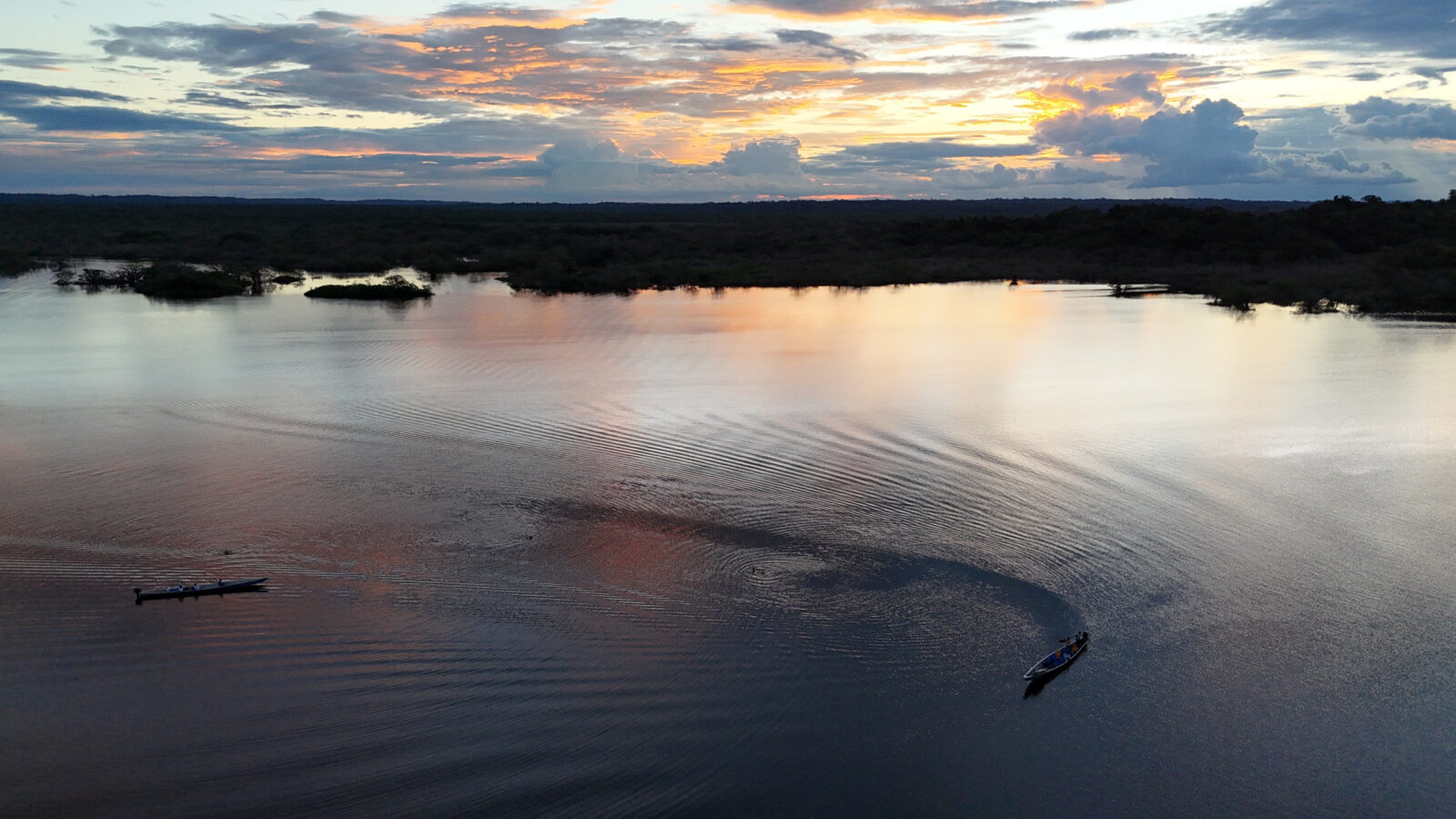
The real strength of the Big 7 is that these seven animals are much more than a checklist. Each one represents a different dimension of Cuyabeno: the rivers and lagoons, the health of the aquatic ecosystems, the balance of the waters, the integrity of the forest, the life of the canopy, the slow world of the trees and the wetlands. Finding one is never just seeing an animal — it is discovering the ecosystem that makes its existence possible. Three ecosystems, three worlds. You can look for all seven on any of our Cuyabeno tours, with the lodge as your base camp.
Which tour sees which? On the 3-day tour you look for the first three — the water guardians. The 4-day tour goes after the first four, and from 5 days on, all seven are on the table. And one honest note: this is the living jungle, not a zoo — some days the reserve shows you everything, some days it keeps its secrets.
Guardians of the Water
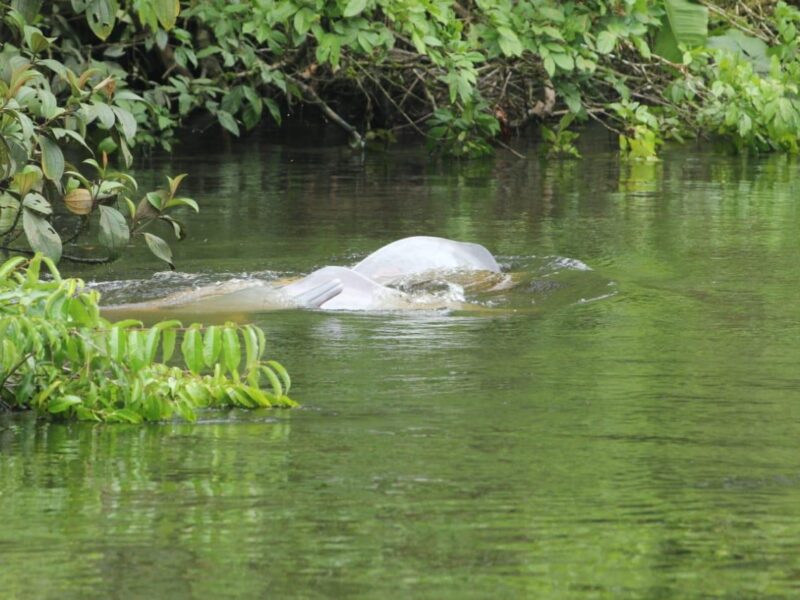
The largest of the river dolphins, able to turn its head thanks to unfused neck vertebrae — and the lodge's namesake.
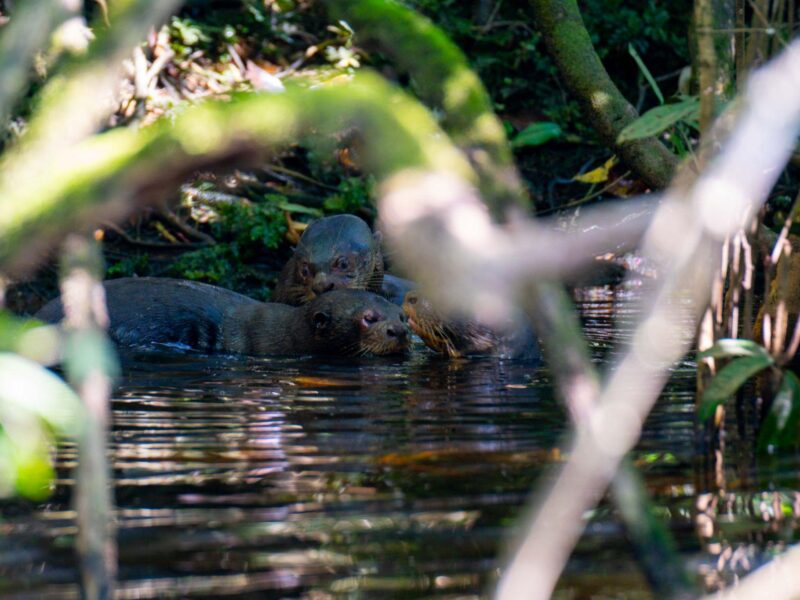
Up to 1.8 meters of playful, chattering predator that lives in close family groups along quiet creeks.
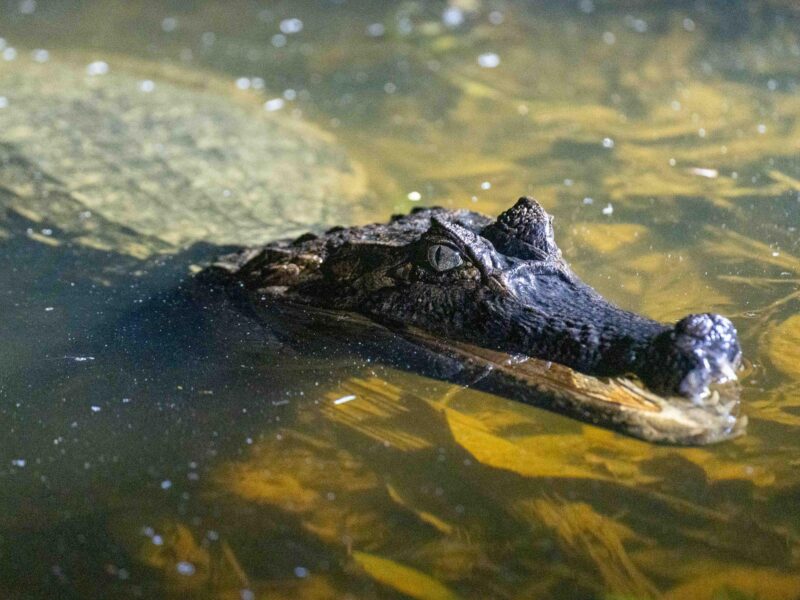
The Amazon's largest predator, growing past 4 meters; its eyes glow red in the torchlight on night canoe rides.
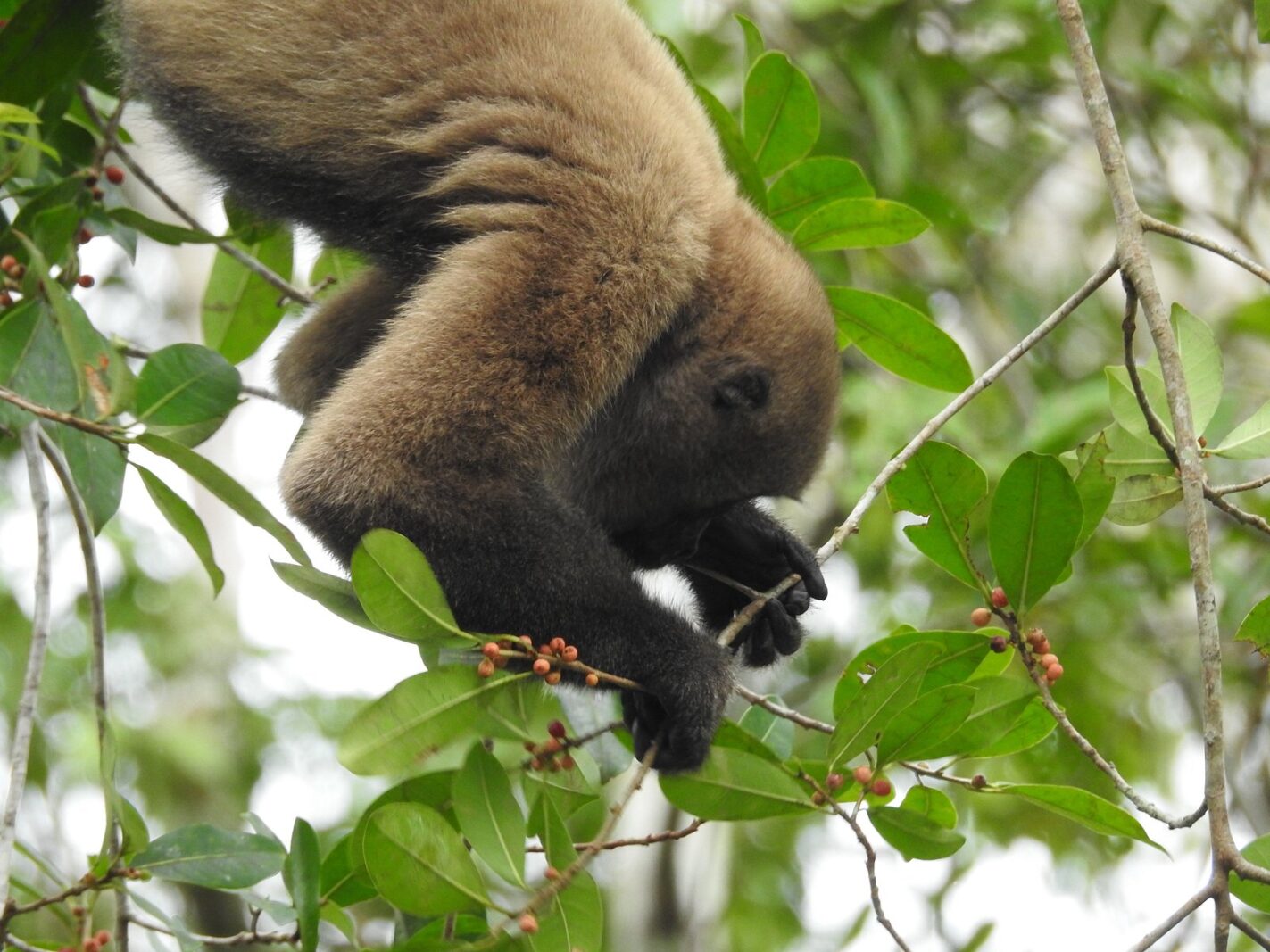
Dwellers of the Jungle
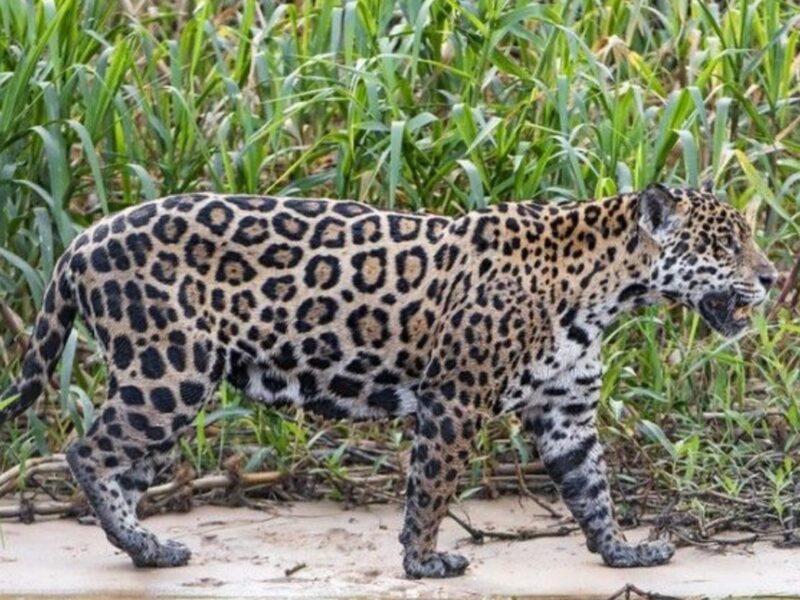
The largest cat of the Americas and a strong swimmer, moving silently between flooded forest and firm ground.
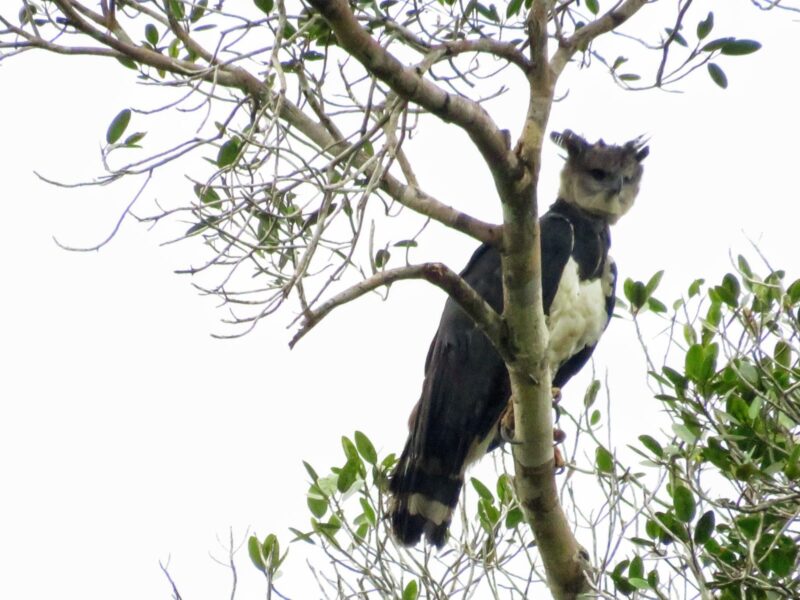
One of the most powerful eagles on Earth, with talons the size of a bear's claws, hunting high in the canopy.
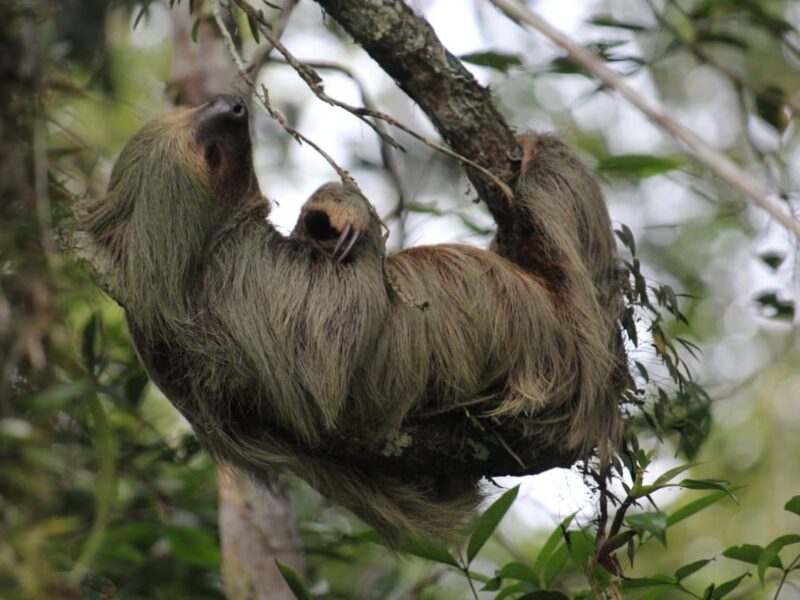
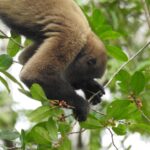
A slow-motion canopy dweller whose fur hosts algae that tints it green — the jungle's best camouflage.
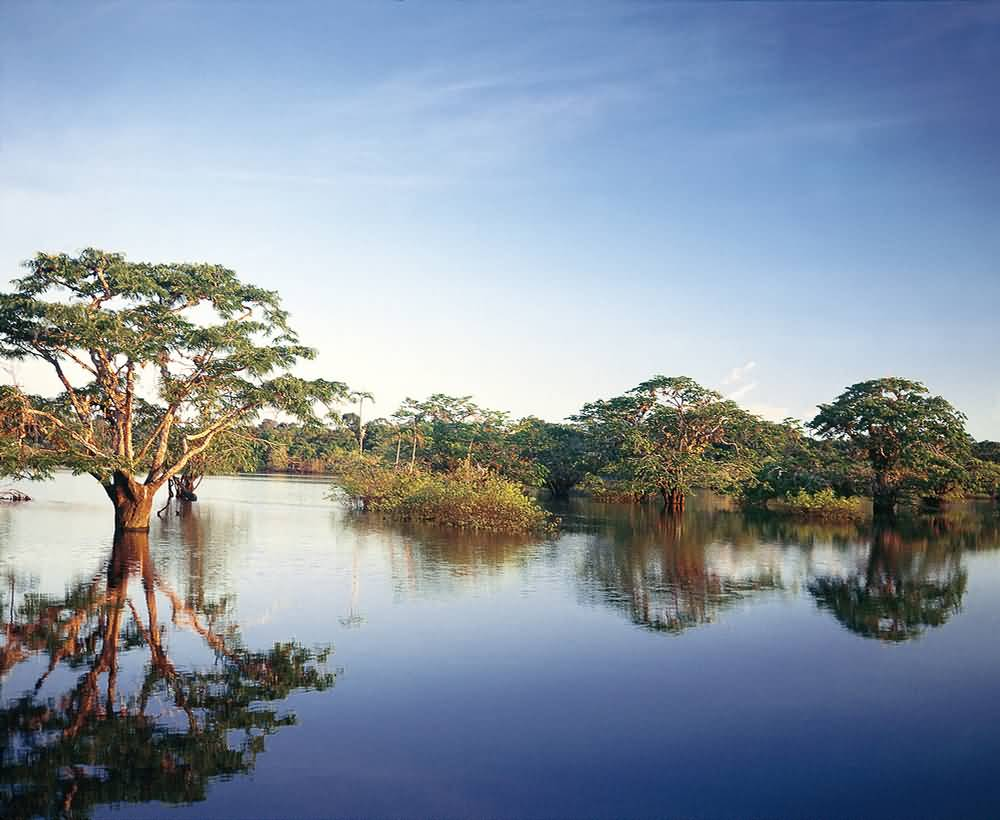
Symbol of the Wetlands
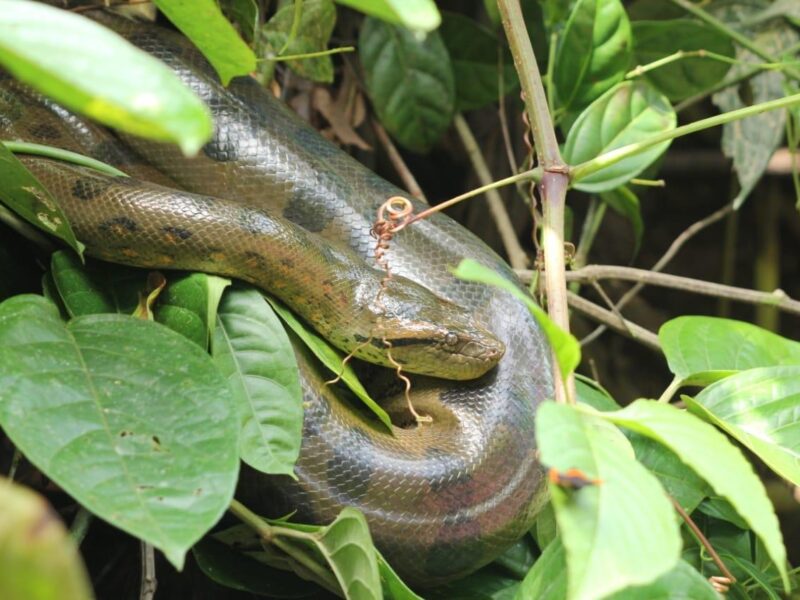
The heaviest snake in the world, an ambush hunter of the flooded wetlands that can exceed 5 meters.
Sighting chances by tour
| Species | Cuyabeno 3 Days – 2 Nights | Cuyabeno 4 Days – 3 Nights | Cuyabeno 5 Days – 4 Nights | Cuyabeno Reserve Explorer — 6 Days / 5 Nights (Paddling) | Pink Dolphin Trail Adventure — 6 Days / 5 Nights |
|---|---|---|---|---|---|
| Pink dolphin | |||||
| Giant otter | |||||
| Black caiman | |||||
| Jaguar | |||||
| Harpy eagle | |||||
| Sloth | |||||
| Anaconda |
Through our guides’ binoculars
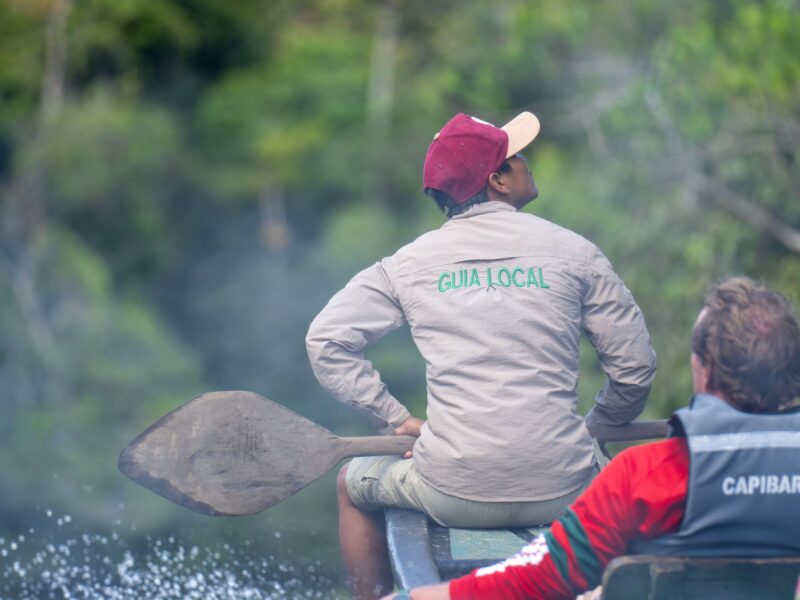
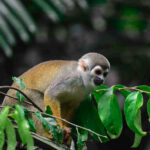
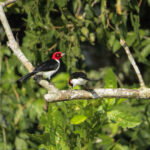
Sloths, potoos, capuchins, macaws, a young anaconda, toucans and a caiman at night — all filmed in the reserve, exactly as travelers see them.
One reserve, three worlds
Wildlife is heritage, not just an attraction
The Big 7 carries one fundamental message: wildlife is much more than a tourist attraction — it is a natural heritage we must protect. Responsible tourism, the participation of local communities and the conservation of these ecosystems are what guarantee that these seven neighbors will still be here for the next generation of travelers.
Ready to meet the pink dolphins?
Write to us and we will help you plan every step of your Amazon trip.
Ask on WhatsApp